


Aerospace maintenance is built on small details. A faint line that signals a crack. A patch of discoloration that hints at overheating. A nick on a blade edge that could grow into a larger issue under stress. The challenge is that many of the most important details live inside engines, gearboxes, ducts, and structural cavities where direct line of sight is impossible.
Remote visual inspection, often shortened to RVI, closes that gap. Using borescopes and videoscopes, technicians can inspect internal components through existing access points, capturing clear images and video without pulling apart assemblies that were never meant to be disturbed frequently. For maintenance teams focused on safety, repeatability, and turnaround time, RVI has become a practical advantage rather than a nice to have. Many organizations turn to USA Borescopes when they are building or upgrading their inspection capability because the right equipment makes a measurable difference in inspection quality.
Remote visual inspection as a safety multiplier
Aviation is an industry where prevention beats correction every time. RVI supports that mindset by making it easier to catch early indicators before they turn into removals, delays, or in flight events. It also helps maintenance teams document findings clearly and consistently so decisions are based on evidence rather than memory or assumptions.
Finding early indicators before they become removals
Internal components can show signs of distress long before performance changes become obvious. RVI makes those signs visible while the asset is still assembled. Common findings include:
- Cracks and surface indications in blades, vanes, combustor liners, or structural areas
- Erosion and corrosion that slowly change clearances or weaken materials
- Overheating indicators like color changes, blistering, or coating wear
- Impact damage such as small dents, nicks, or edge deformation
- FOD clues including unusual scarring or debris lodged in tight zones
The value is not just spotting an obvious defect. Often, the real win is identifying an early stage condition and trending it over time. When inspections are consistent, teams can see whether a mark is stable or progressing. That turns uncertainty into a plan.
Improving confidence in go or no go decisions
Maintenance decision making can be difficult when findings are borderline. RVI supports better judgment by allowing technicians and inspectors to review the same evidence. Clear images and short video clips reduce the risk of miscommunication across shifts, stations, or maintenance providers. This is especially important when a finding must be evaluated against limits, manuals, or OEM guidance.
RVI does not replace the need for skilled interpretation. It improves the quality of the information being interpreted. When the view is stable, properly lit, and captured at the right distance and angle, the conversation becomes more objective.
How RVI reduces downtime and cost without cutting corners
Downtime is expensive in aviation, and not only because of labor. A grounded aircraft disrupts schedules, creates knock-on delays, and can cause cascading operational issues. RVI helps reduce downtime by minimizing unnecessary disassembly and by making it easier to plan the work that truly needs to happen.
Less teardown, fewer man hours, faster return to service
Traditional inspection methods often require partial teardown to reach internal areas. That has three major downsides:
- Time lost to removal and reinstallation
- Risk of creating new issues during disassembly and reassembly
- Increased chance of parts needing replacement because of disturbed seals, fasteners, or fittings
RVI supports a lighter touch. When technicians can inspect through access ports, borescope openings, or service panels, they avoid turning a quick condition check into a multi day task. In many cases, a targeted RVI can confirm that a suspected issue is not present, allowing the aircraft to return to service with confidence.
Better planning when repairs are truly needed
When a defect is found, RVI still saves time by improving planning. Clear visuals help teams determine whether the issue is localized or widespread, whether a repair is likely feasible, and what parts and skills will be required. That reduces the chance of starting a job only to pause because the right tooling or materials are missing.
A well-run RVI program also reduces repeat work. If the initial inspection is well documented, the next team does not have to recreate the same access, angles, and viewpoints just to understand what happened.
Inspection accuracy depends on more than the camera
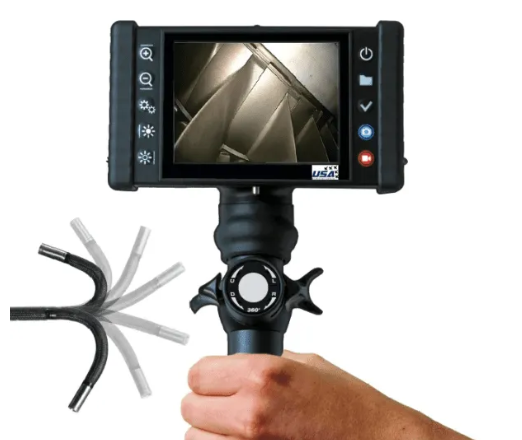
It is tempting to think RVI quality is just about resolution. In reality, inspection accuracy depends on access, lighting, probe control, and repeatability. A high end scope used inconsistently can produce weaker results than a solid scope paired with disciplined technique.
Access, lighting, articulation, and operator technique
Internal aircraft components are complex. There are bends, obstructions, and reflective surfaces that can wash out images. A strong RVI setup balances these practical needs:
- Proper diameter and working length to reach the target without forcing the probe
- Controlled articulation for looking behind features and around corners
- Lighting control to avoid glare on metallic surfaces
- Probe stiffness and handling that allow steady movement and stable viewing
Operator technique matters just as much. Slow movements, careful positioning, and a consistent viewing routine improve image usability and reduce the risk of probe damage. Teams that treat RVI as a repeatable process, rather than a quick look, tend to get more reliable outcomes.
Documentation that holds up to review
A key advantage of RVI is documentation. When images and video are captured in a consistent way, they can be reviewed by supervisors, quality staff, or engineering, and they can be stored for comparison over time.
Good documentation is not complicated, but it does require habits:
- Capture a wide context view, then a close detail view
- Record short clips when still images do not show depth well
- Label images by location and viewpoint so they can be repeated later
- Save reference images from healthy components for comparison
This approach reduces disagreements and increases confidence that the inspection met the intent of the task.
Where RVI fits in modern maintenance programs
RVI is used across a range of maintenance environments, from quick line checks to deeper inspections during scheduled events. The exact workflow changes, but the purpose stays the same: see more, sooner, and with less disruption.
Line maintenance versus heavy checks
In line maintenance, RVI is often used to confirm condition after a reported event, a trend, or an operational concern. Speed and portability matter, but so does capturing evidence that supports the sign off.
In heavier checks, RVI supports deeper condition assessment and trending. Teams may capture a standardized set of views each cycle, creating a history that helps predict when components will need attention. That historical context is a quiet strength of RVI because it can reveal patterns that are hard to see in isolated inspections.
Supporting reliability centered maintenance
RVI aligns naturally with reliability thinking. When teams can spot early wear and track it, they can make better interval decisions. Instead of relying solely on fixed schedules or gut feel, they can reference real condition data and documented imagery. Over time, that can reduce unnecessary removals and improve component life utilization without increasing risk.
Best practices to get consistent, defensible results
RVI delivers the most value when it is treated as a process. The goal is consistency across technicians, shifts, and locations, even when conditions vary.
A few practices that tend to raise inspection quality:
- Keep access points clean and protect them during probe insertion
- Use consistent reference points so images can be repeated and compared
- Create a small library of acceptable conditions and common defects
- Train technicians on lighting, focus, and articulation control
- Review a sample of inspections periodically for quality and consistency
When these basics are in place, RVI becomes a reliable input to maintenance decision making rather than an occasional tool.
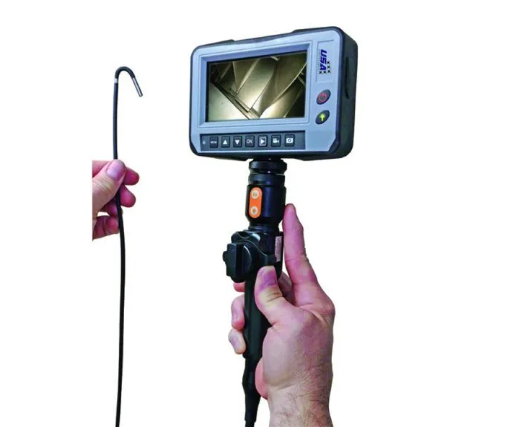
Remote visual inspection helps aerospace maintenance teams do three things well: protect safety, reduce downtime, and improve inspection accuracy. It makes internal condition visible without unnecessary teardown, supports better decisions through clear documentation, and enables repeatable inspections that can be trended over time. For organizations looking to strengthen their RVI capability, it is worth evaluating whether current tools and workflows truly support consistent results.
To explore inspection solutions that fit aviation maintenance needs, browse the latest options at their products page. To learn more about USA Borescopes or to discuss the right approach for your inspection tasks, contact the team here.
About The Author
The author is an independent inspection technology specialist with extensive experience supporting remote visual inspection programs across aviation and industrial environments. They focus on practical field workflows, repeatable documentation, and equipment selection that improves accuracy and reduces unnecessary disassembly.