


Traditionalists sometimes raise an eyebrow at anything not pleated by hand, yet modern wardrobes tell another story. A ready to wear saree now turns up at family functions, office celebrations and even receptions. So where does smart convenience end and a faux pas begin? Let us go through the question one occasion at a time.
Does Anyone Actually Notice?
For most occasions, the honest answer is no. Guests notice how an outfit hangs, not who folded the pleats. A clean fall, a well-fitted blouse and good fabric will always speak louder than the method used to drape it, however much the purists protest.
The exceptions are rare and usually tied to family custom, such as rituals where elders expect a specific regional style. When in doubt, a quick word with the host or an older relative settles the matter far faster than guessing ever could.
What Formality Really Depends On
Formality comes from fabric weight, embellishment and styling rather than construction. A richly worked piece paired with a structured blouse and good jewellery reads dressy whether the pleats were folded at home or set in advance, because the eye follows richness first.
A ready made saree in breezy cotton or a crushed blend, however, reads casual no matter how neatly it is worn. Choose the cloth to match the event first, and only then think about how the pleats are formed or fastened.
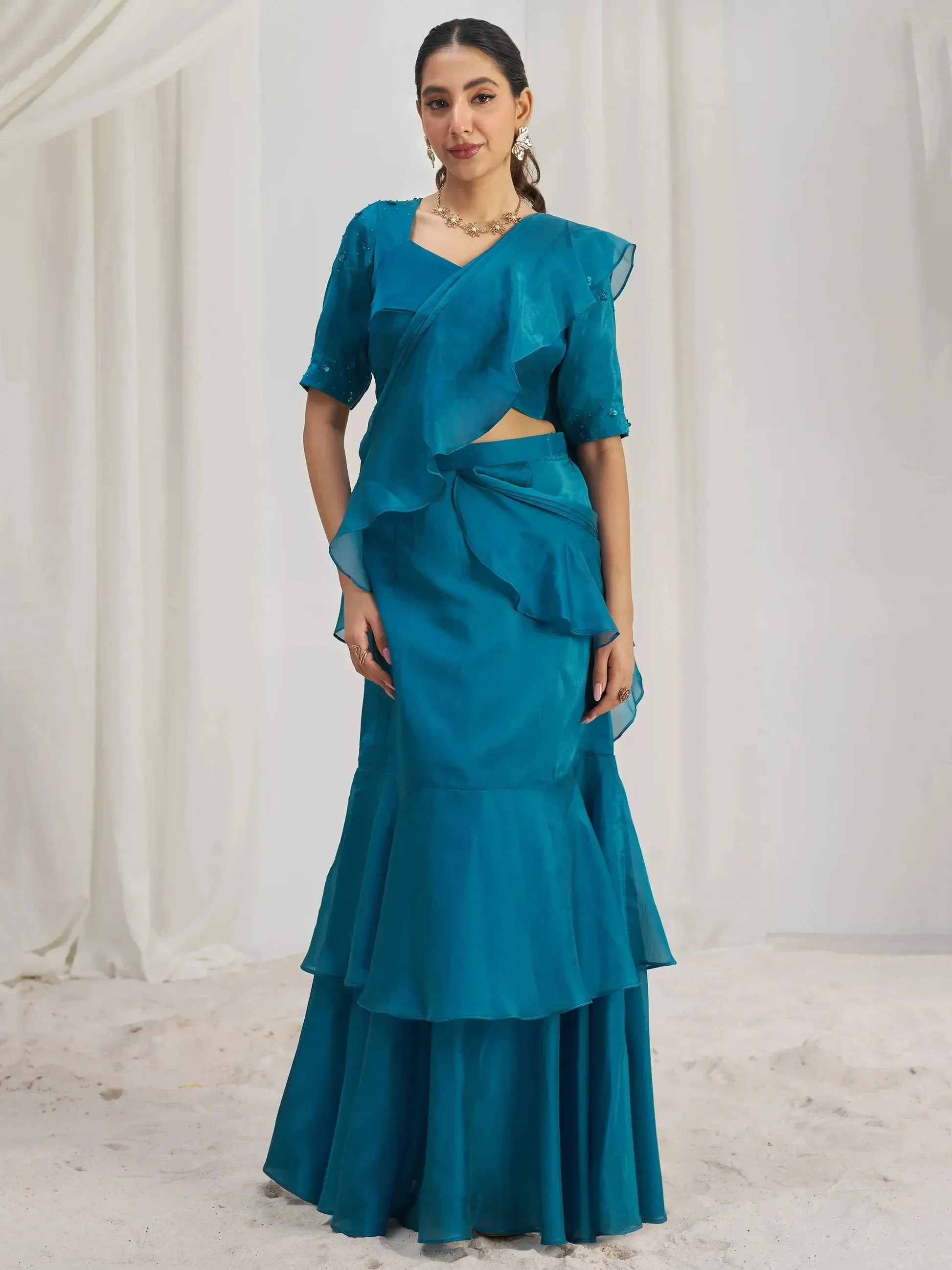
Where It Works Beautifully
Sangeets, cocktail evenings and receptions suit the style well, because you will be dancing, posing and walking between halls all night. Set pleats stay put through every spin and selfie, which means fewer anxious trips to the mirror and more time with the people you came to see.
It is equally handy when a ceremony stretches for hours. Nobody wants to spend the break retreating to a corner to repin a slipping fold, especially with cameras about, relatives waiting to chat and a buffet queue forming across the hall.
Where You Should Think Twice
Heirloom weaves and very delicate silks deserve hand draping, because you can adjust tension fold by fold and spare fragile threads from stress. Fixed stitching is less forgiving on cloth that is decades old, and any repair afterwards is difficult and costly.
Strictly ritual settings, or families with a dress code for particular ceremonies, are another case. Ask beforehand, since a polite question costs nothing while a raised eyebrow from an elder can follow you around for the whole day and well into the dinner.
Small Upgrades That Add Polish
Steam the pleats lightly before you leave so they fall with a crisp line. Wrinkled folds are the quickest giveaway of any convenience drape, and a few minutes with a handheld steamer erases them completely, even on slippery fabrics that resist an iron.
Add a structured blouse, a slim waist belt and one statement piece of jewellery. These finishing touches pull attention upward and make the whole look feel considered rather than quickly assembled, which is exactly the impression you want in group photographs.
A Simple Decision Test
Ask yourself three things: will I be seated for long, will I be moving a lot, and does the host expect a particular style? If the first two answers are yes and the third is no, the pleated option is a safe and comfortable bet.
If the third answer is yes, follow the family tradition and save the convenient drape for another day. Most events never ask that of you, so you can choose with confidence and stop second-guessing a perfectly sensible decision.
What About Photographs and Memories?
Weddings and festivals live on in albums, so think about how the drape will look years from now. Neat, symmetrical pleats photograph cleanly from every angle, and a firm waist keeps the outline sharp in candid shots taken while you are laughing.
Ask the photographer for a few full-length frames in daylight. If the pleats and pallu look tidy there, you have your answer, and the debate about hand versus ready folds will seem very small in the album.
Where This Leaves You
Ready pleats are acceptable almost everywhere that matters. The real test is the fit, the fabric and your composure while wearing it, none of which depend on how the folds were created or who arranged them at what hour.
So wear it proudly to the wedding, the dinner and the festival. If it keeps you relaxed and well turned out, it has already done its job better than a perfect hand-made pleat that left you anxious and tugging at your waist all night.